
Discover samphire: the vegetable of the coast
4 June 2026
Have you ever seen samphire in the vegetable department or on a menu? This special vegetable grows along the coast and stands out for its fresh green stems and salty taste. Although marsh samphire has been known in Zeeland for many years, more and more people are discovering this sea vegetable. But what exactly is marsh samphire, what does it taste like and what can you make with it?
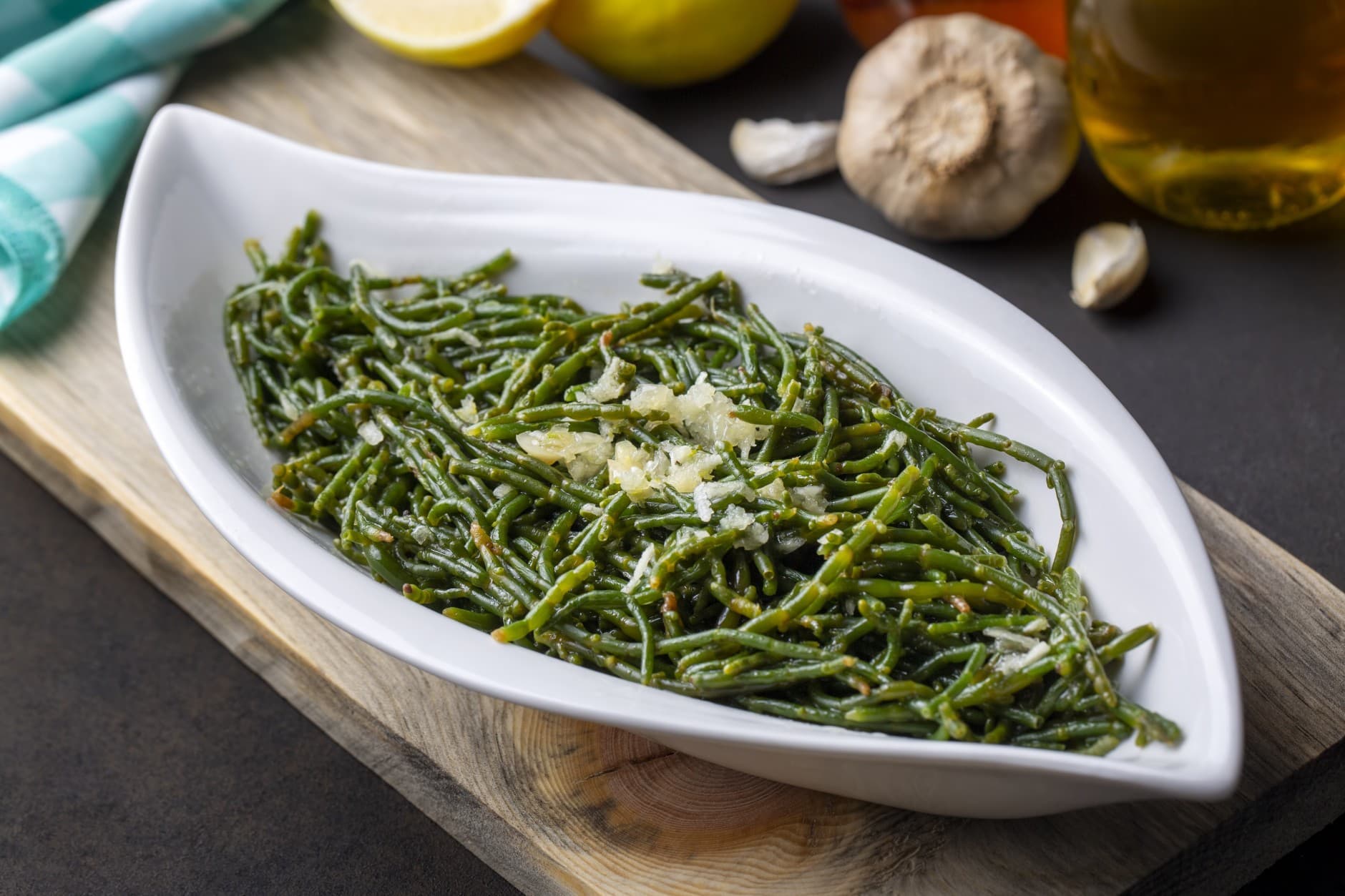
What exactly is samphire?
Marsh samphire is a plant that grows on saline soils along the coast. It is resistant to salt water and absorbs salt as it grows. This gives marsh samphire its distinctive slightly salty taste. The young green stems are eaten as a vegetable and have a crunchy texture.
What does marsh samphire taste like?
Marsh samphire has a fresh, crunchy bite and a subtle salty taste. It is this combination that makes the vegetable so special. Its natural saltiness means that you often don't need to add much or any extra salt to a dish. That is why samphire is often combined with fish, but it is also excellent in vegetarian dishes, salads and pastas.
When is marsh samphire available?
Dutch glasswort is mainly available from May to August. This is when the vegetable is at its best and you can enjoy fresh home-grown marsh samphire.
How to prepare marsh samphire?
Marsh samphire requires very little. If necessary, remove the lower, stiffer parts and briefly rinse the vegetable under cold water. Then blanch it for a few minutes or stir-fry it briefly. This keeps the crunchy texture.
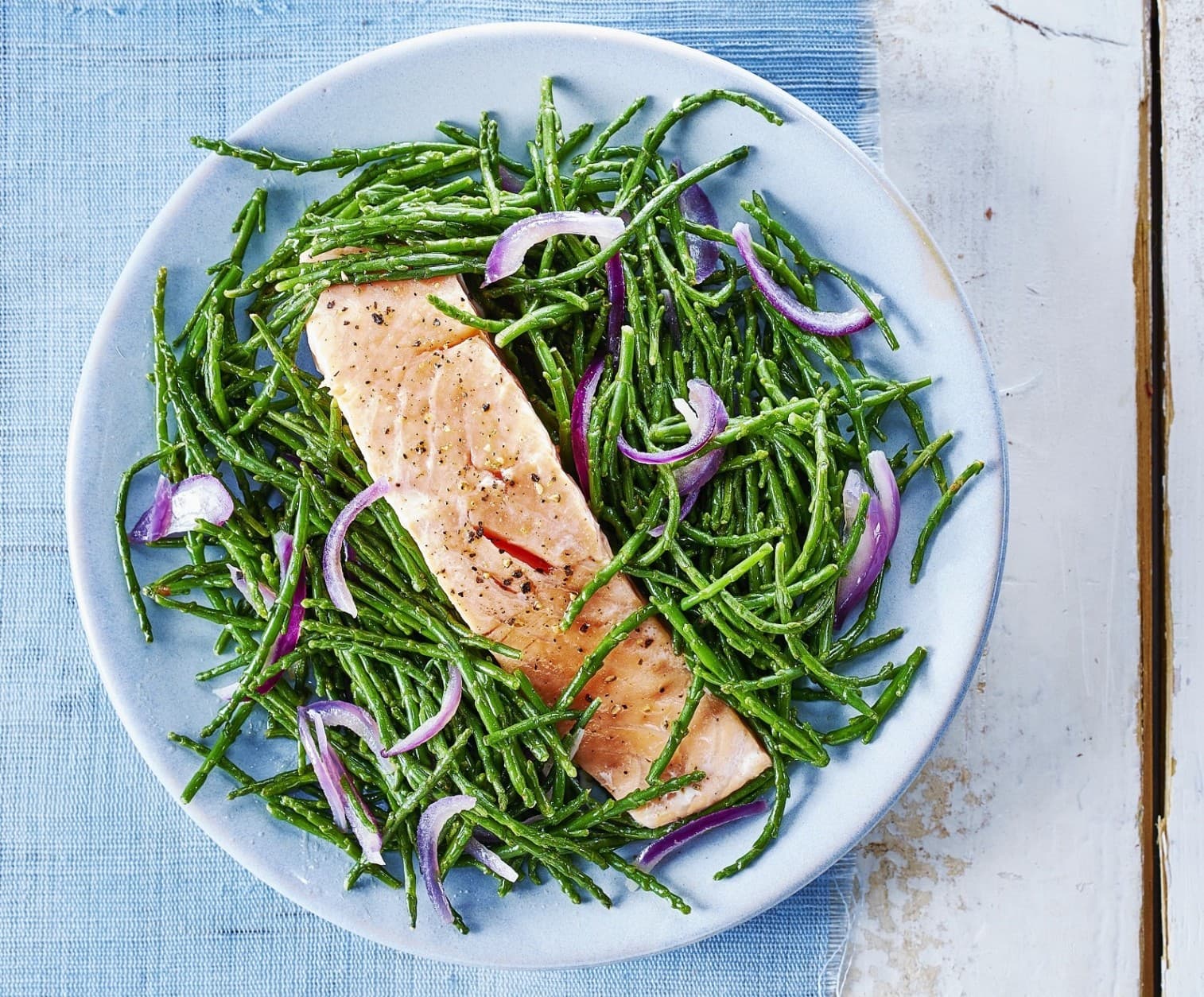
Would you like to use samphire yourself? Then try the recipe samphire with braised salmon. In this dish, the salty, crunchy samphire makes a delicious combination with the mild flavour of salmon. The vegetables are cooked briefly, preserving their fresh bite. Together with the salmon, the result is a simple but tasty dish that focuses on natural flavours. Ideal for a weekday meal or a summer dinner where you want to enjoy seasonal produce. Of course, you can also use samphire as inspiration for other dishes, such as salads, pasta or a colourful bowl.
Be careful with the salt content
Marsh samphire is known for its distinctive salty taste. This is because the plant grows on saline soils along the coast and naturally absorbs salt. As a result, marsh samphire contains more salt than many other vegetables. Do you eat samphire? Combine it with other vegetables, such as peppers, courgettes or lettuce. That way, you can enjoy the special taste of marsh samphire without consuming too much salt. Moreover, combining different vegetables adds variety to your plate.