
Discover the prickly pear: a spiky fruit full of surprises
2 July 2026
Have you ever seen a cactus in bloom whilst on holiday in a sunny country? There’s a good chance that a prickly pear will grow from it later on. This unusual fruit may look a bit intimidating, but behind its prickly exterior lies a juicy and surprisingly fresh flavour.
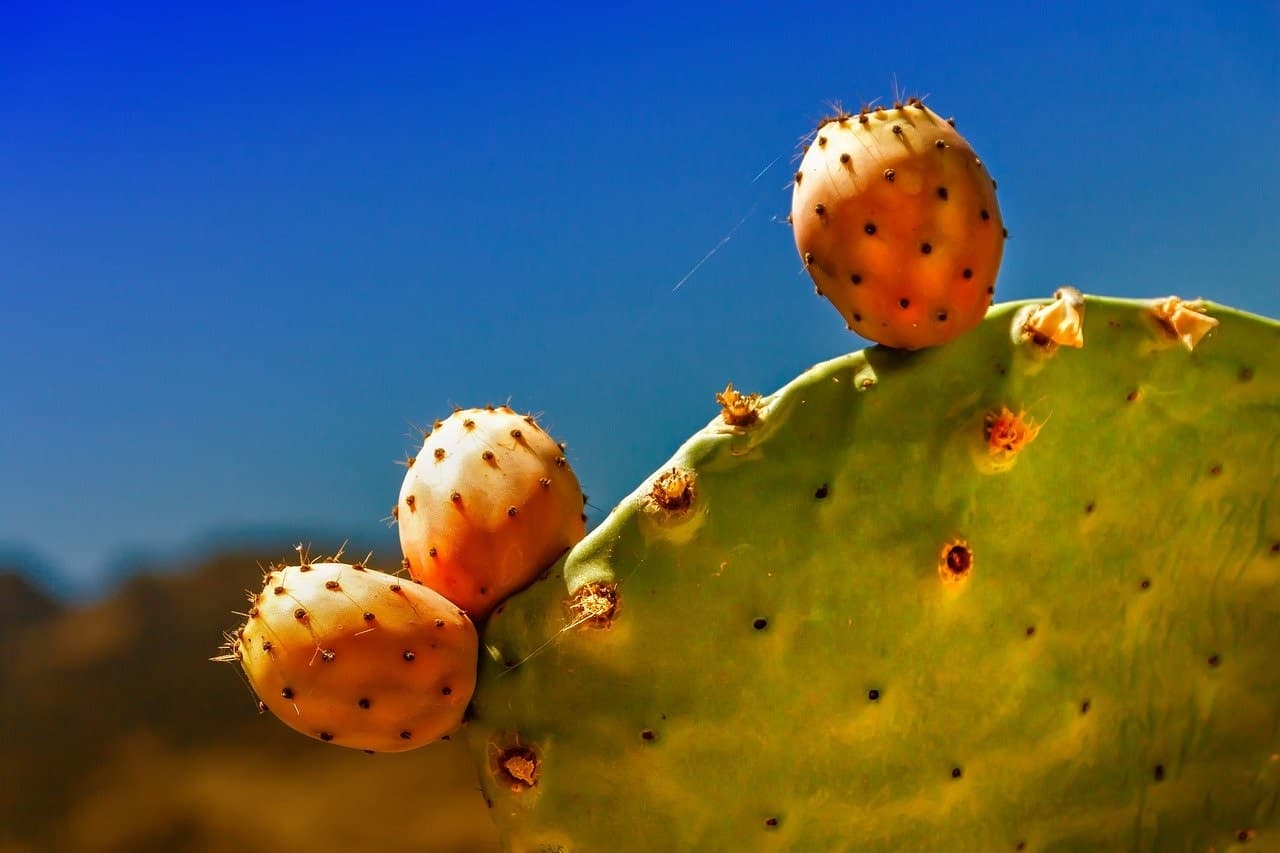
What is a prickly pear?
The prickly pear is the fruit of the prickly pear cactus (Opuntia ficus-indica). This cactus is native to Central and South America, but is now also widely cultivated in countries around the Mediterranean, such as Spain, Portugal and Morocco. As a result, prickly pears are readily available in the Netherlands too.
The fruit has a striking skin that varies in colour from yellow-green to red or purple. Inside, there is orange or red flesh containing small black seeds. The flavour is sweet and tangy, reminiscent of a pear.
Don’t be put off by the spines
The name says it all: the prickly pear grows on a cactus. This means that the skin has tiny barbs. It is therefore wise never to handle a prickly pear with bare hands. It is better to use a tea towel, gloves or oven gloves.
Want to eat the fruit? First, scrub the prickly pear clean under running water. Then cut into the skin and carefully peel it away from the flesh. You can also cut the fruit in half and scoop out the flesh with a spoon, just like with a kiwi. The small black seeds are perfectly edible.
How do you eat a prickly pear?
You don’t need to cook or bake a prickly pear; it tastes best when eaten raw. You can:
- eat as a snack;
- add it to a fruit salad;
- use in a smoothie;
- serve with yoghurt or quark;
- use as a refreshing addition to a summer dessert.
Thanks to its soft, juicy texture, the prickly pear is also a lovely fruit to try combining with other tropical fruits.
A real eye-catcher
You might not often see prickly pears in your shopping basket, but that’s precisely why they’re so worth trying. Their striking appearance, exotic look and surprising flavour make them a real eye-catcher on the table. Curious about this fruit? Find out more about the prickly pear here.